
2025-26 report
Budget in Brief
Delivering value through education, research, and service
UW–Madison’s budget powers the work that matters most — teaching, research, and services that benefit students and communities across Wisconsin. Today, most resources are directed toward academic programs, student support, and research that drives opportunity statewide. This approach helps ensure continued value while staying focused on access, affordability, and impact.
This Budget in Brief summarizes how UW–Madison is funded, how those dollars are used, and the return on investment they generate for communities throughout Wisconsin.
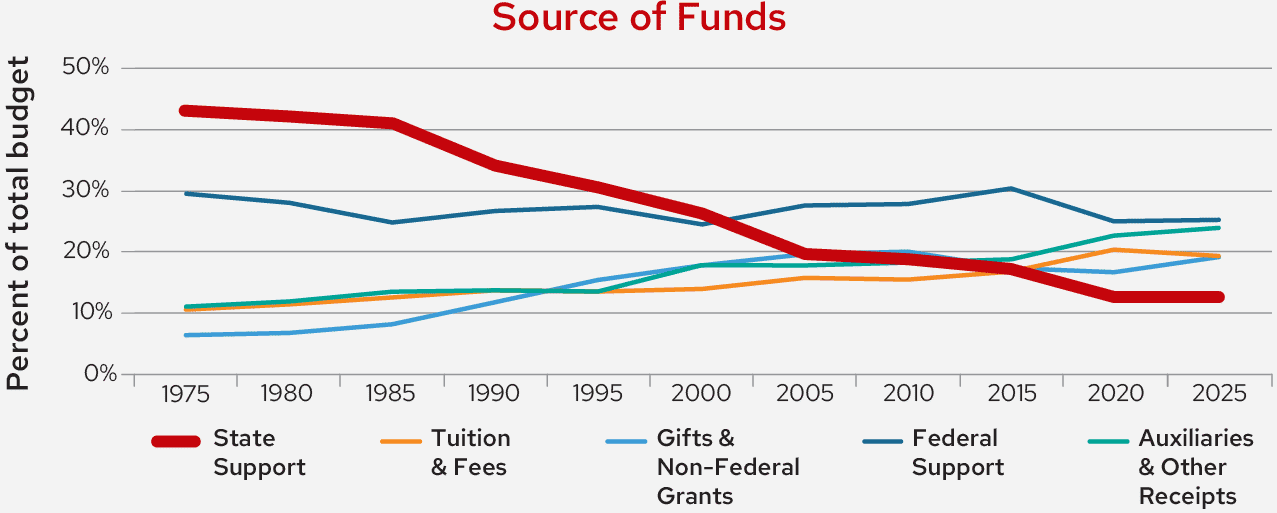
Economic growth for Wisconsin outpaces state investment
In 1974, when the UW System was created, state funding accounted for 43 percent of UW–Madison’s total budget. In 2025, state funds made up just 13 percent of the university’s total budget.
Growing the Wisconsin economy
Wisconsin taxpayers get a tremendous return on their investment from the state’s flagship university. Measurable benefits include jobs, tax revenue, and statewide economic growth, improving opportunities for families and businesses alike.
$38.9B
UW–Madison drives the state’s economy with nearly $39 billion in annual economic impact.
287,232
Total jobs generated by UW–Madison, affiliates, and spin-offs.
$21.66
Taxpayers receive $21.66 in return for every $1 invested in UW–Madison.
How UW–Madison supports Wisconsin
Student access and affordability
Through its education, research, and service missions, UW–Madison fuels student success, innovation, community partnerships, and economic benefits. It starts with being an accessible and affordable institution of higher learning. A majority of students graduate debt-free or with relatively low levels of student debt.
90%
In 2024–25, 90 percent of responding undergraduates were employed, admitted to graduate school, committed to military or volunteer service, or started a company within 6 months of graduation.
67%
In 2024–25, 67 percent of bachelor’s degree recipients had no student loan debt, the highest percentage in the last 10 years.
25%
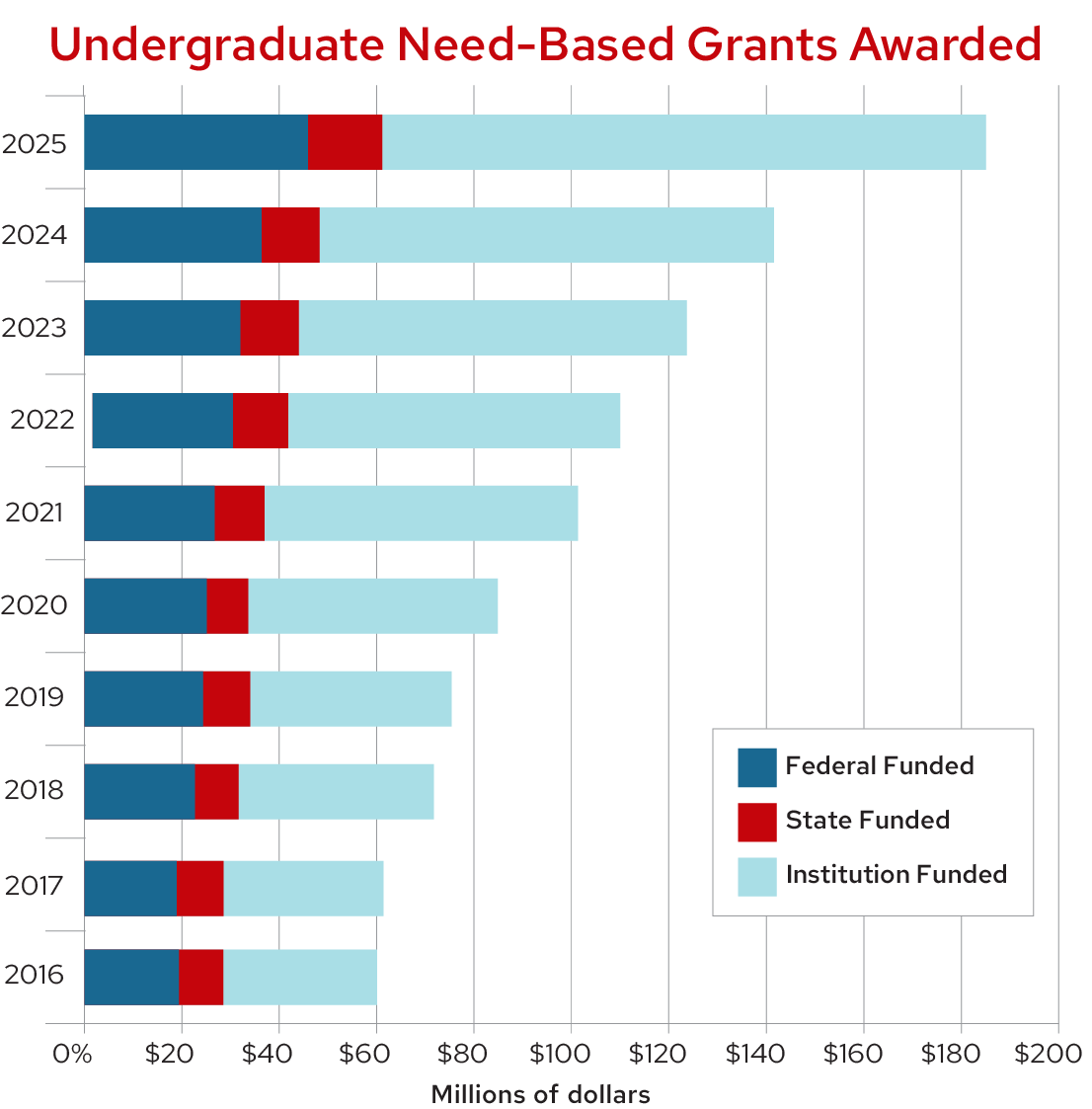
One in four Wisconsin resident undergraduate students receive financial aid that covers full tuition and fees through Bucky’s Tuition Promise or the full cost of attendance through Bucky’s Pell Pathway. These income-based programs are funded only with institutional dollars and private gifts at no cost to taxpayers.

Wisconsin’s workforce
UW–Madison educates Wisconsinites. Out of every class of first-year undergraduates, at least 3,600 must be in-state students; UW–Madison has substantially exceeded this requirement in recent years. After earning their degree, more than 80 percent of Wisconsin resident bachelor’s degree recipients remain in Wisconsin for at least five years.
72
UW–Madison students come from all 72 counties in Wisconsin.
196,100+
As of 2025, more than 196,100 UW–Madison alumni live in every one of Wisconsin’s 72 counties.
$760,000
A recent study shows that, on average, a UW–Madison degree is worth $760,000 in lifetime earnings relative to a high school diploma.
Research and innovation
UW–Madison’s research enterprise fuels teaching and learning and spurs economic growth and development.
5th
UW–Madison’s research enterprise ranked fifth nationally in research expenditures.
$1.9B
In fiscal year 2024, UW–Madison faculty and staff brought in more than $1.9 billion of research funds, much of which is spent on goods and services in Wisconsin.

Funding realities and trends
UW–Madison’s revenue primarily funds its core missions of education, research, and outreach, with the majority of expenditures directly tied to academic and student-focused priorities.
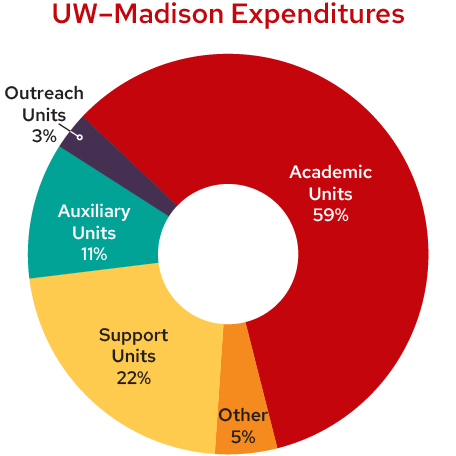
How UW–Madison expenditures support the university
More than $2.8 billion, or 59 percent of total expenditures, goes toward operating our academic units.
Twenty-two percent is spent on student financial aid and support units necessary to the academic and research missions of the university, such as the library system and information technology.
Eleven percent is spent on auxiliary units, such as Housing, that serve the entire university and generate much of their own revenue.
Tuition and affordability
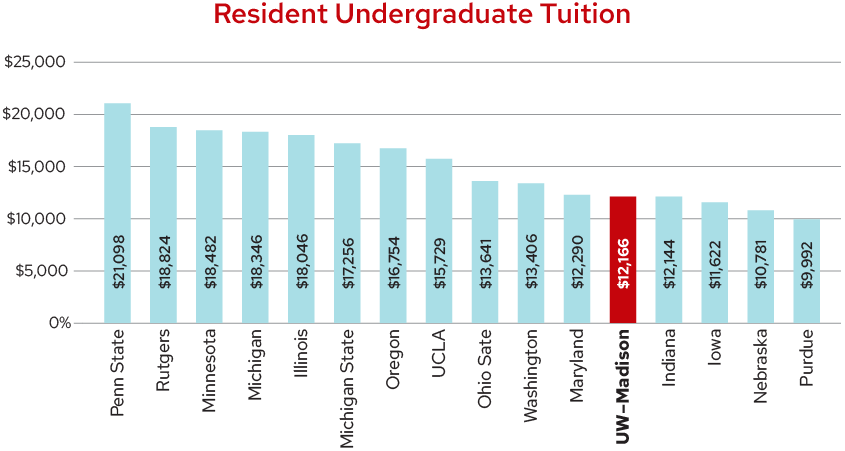
UW–Madison is consistently ranked one of the nation’s best values among public colleges and universities. Among the Big Ten Conference’s 16 public universities, UW–Madison has the fifth-lowest in-state resident undergraduate tuition and fees. With continued support from state taxpayers, we strive for excellence while keeping tuition for in-state students affordable.
Learn more about UW–Madison’s impact
The University of Wisconsin–Madison and its alumni are major drivers of Wisconsin’s workforce, research, and economic growth. Investment in UW–Madison delivers a strong return for the state. UW–Madison graduates become the highly skilled employees Wisconsin businesses need. Research in fields such as healthcare, advanced computing, and nuclear energy grows the state’s economy and benefits Wisconsinites at home, at work, and at play.